8: Wallets, Exchanges and Security
The Guardians of Digital Wealth
Throughout history, the safekeeping of wealth has shaped the institutions of civilisation.
Ancient merchants secured their coins in locked chests. Families entrusted their savings to banks. Businesses relied upon vaults, ledgers and trusted custodians to protect their assets.
Cryptocurrencies have not altered the importance of security; they have merely transformed its nature.
In the world of blockchain, ownership is not established through physical possession or institutional records, but through cryptographic keys. The responsibility for protecting these keys rests, to a far greater extent, with the individual.
This shift represents one of the most profound differences between traditional finance and the cryptocurrency ecosystem. While decentralisation offers greater autonomy and control, it also demands greater awareness and personal responsibility.
To participate safely in this new financial landscape, it is essential to understand how cryptocurrencies are acquired, stored and protected.
How to Buy and Store Cryptocurrency
For most people, the journey into cryptocurrency begins with an exchange.
A cryptocurrency exchange acts as a marketplace where users can buy, sell and trade digital assets. These platforms connect buyers and sellers, provide access to different cryptocurrencies and often offer additional services such as staking, lending and portfolio management.
The process of acquiring cryptocurrency generally follows a series of familiar steps:
- Create an account with a reputable exchange
- Complete any required identity verification procedures
- Deposit funds using a bank transfer, debit card or other supported payment method
- Purchase the desired cryptocurrency
- Transfer the assets to a secure wallet if long-term storage is intended.
While exchanges offer convenience, they are only one part of the cryptocurrency ecosystem.
Once purchased, digital assets must be stored in a wallet.
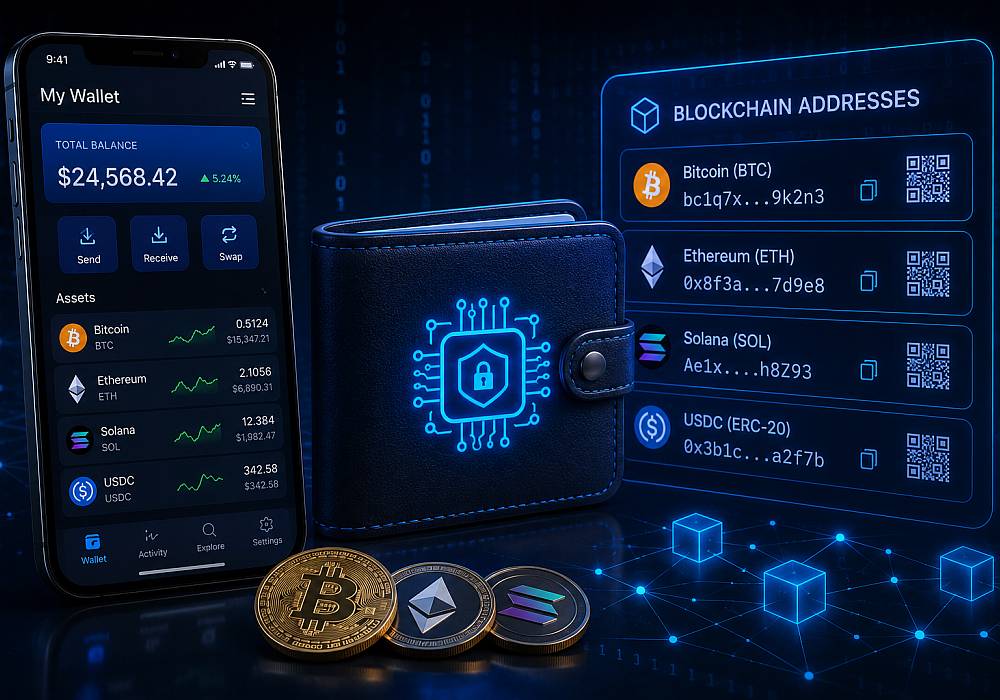
Despite the name, a cryptocurrency wallet does not actually hold coins or tokens. Instead, it stores the cryptographic credentials required to access and manage assets recorded on the blockchain.
Wallets generally fall into two categories.
Hot Wallets
Hot wallets are connected to the internet.
They include:
- Mobile applications
- Desktop software
- Browser extensions
- Exchange-hosted wallets
Hot wallets are convenient for everyday transactions and frequent trading. However, their constant connection to the internet increases their exposure to cyber threats.
Cold Wallets
Cold wallets remain offline when not in use.
Examples include:
- Hardware wallets
- Paper backups
- Air-gapped devices
Because they are isolated from online networks, cold wallets offer enhanced protection against hacking and malware.
Many experienced users adopt a practical approach similar to traditional finance: maintaining smaller amounts in hot wallets for regular use while storing larger holdings in cold wallets for long-term security.
Custodial and Non-Custodial Wallets
Another important distinction concerns who controls the cryptographic keys.
Custodial Wallets
In a custodial wallet, a third party, usually an exchange or service provider, manages the private keys on behalf of the user.
This arrangement offers convenience and simplified account recovery, but it requires trust in the provider's security practices.
A common phrase within the cryptocurrency community captures this principle:
Not your keys, not your coins.Non-Custodial Wallets
Non-custodial wallets place complete control in the hands of the user.
Only the owner possesses the private keys, meaning no intermediary can access or recover the assets.
This autonomy comes with significant responsibility. Losing access credentials may result in the permanent loss of funds.
The choice between custodial and non-custodial solutions ultimately reflects a balance between convenience and control.
Private Keys and Seed Phrases
At the heart of cryptocurrency ownership lies a simple truth: whoever controls the private keys controls the assets.
A private key is a unique cryptographic code that authorises transactions and proves ownership of digital assets associated with a wallet.
It functions much like a highly secure digital signature.
The corresponding public key generates wallet addresses that can be shared with others to receive funds.
While public addresses are intended to be visible, private keys must remain strictly confidential.
Modern wallets simplify this process through the use of seed phrases.
A seed phrase, sometimes called a recovery phrase, consists of a sequence of randomly generated words, typically twelve or twenty-four.
These words act as a human-readable backup for the wallet's private keys.
Anyone who possesses the seed phrase can recreate the wallet and gain access to its contents.
For this reason, seed phrases should be treated with exceptional care.
Best practices include:
- Writing the phrase down by hand
- Storing it in a secure offline location
- Creating multiple backups in separate places
- Protecting it from fire, water and physical damage
- Never storing it in cloud services or unencrypted digital files
- Never sharing it with anyone
No legitimate organisation, wallet provider or exchange will ever ask for a user's seed phrase.
If someone requests it, it is almost certainly a scam.
Common Risks and Scams
The decentralised nature of cryptocurrency creates opportunities for innovation, but it also attracts criminals seeking to exploit inexperienced users.
Understanding common risks is one of the most effective forms of protection.
Phishing Attacks
Phishing scams attempt to trick users into revealing passwords, private keys or seed phrases.
Attackers often impersonate exchanges, wallet providers or customer support representatives through:
- Fake websites
- Fraudulent emails
- Social media messages
- Search engine advertisements
Carefully verifying website addresses and avoiding unsolicited links can significantly reduce risk.
Investment Scams
Promises of guaranteed returns or risk-free profits should be treated with scepticism.
Common warning signs include:
- Claims of exceptionally high returns
- Pressure to invest quickly
- Lack of transparency
- Unverified endorsements from public figures
Legitimate investments always involve some degree of risk.
Fake Tokens and Impersonation
Scammers may create counterfeit tokens designed to resemble legitimate projects.
Before purchasing any digital asset, investors should verify:
- The official project website
- The correct token contract address
- Independent sources of information
Rug Pulls
A rug pull occurs when developers abruptly abandon a project after attracting investment, leaving token holders with worthless assets.
Projects lacking transparency, identifiable teams or independent audits warrant particular caution.
Malware and Device Compromise
Malicious software can monitor keystrokes, alter wallet addresses or gain unauthorised access to devices.
Users should:
- Keep software up to date
- Use strong, unique passwords
- Enable two-factor authentication
- Install security updates promptly
- Avoid downloading software from untrusted sources
Social Engineering
Not all attacks rely upon technical vulnerabilities.
Criminals frequently exploit human emotions such as urgency, fear and greed.
Messages claiming that an account has been compromised or that a limited-time opportunity is about to expire are often designed to provoke hasty decisions.
In cryptocurrency, patience and caution are among the most valuable security tools.
Building Good Security Habits
Effective cryptocurrency security is not achieved through a single product or technology. It is the result of consistent habits and informed decision-making.
Experienced users often follow a number of guiding principles:
- Invest only what they can afford to lose
- Verify information through multiple sources
- Keep long-term holdings offline whenever possible
- Use reputable platforms and wallets
- Protect private keys and seed phrases above all else
- Remain sceptical of unsolicited offers and extraordinary promises
In traditional finance, institutions bear much of the responsibility for safeguarding assets. In the world of cryptocurrency, that responsibility increasingly belongs to the individual.
Freedom and Responsibility
Cryptocurrencies offer a powerful vision of financial autonomy.
They enable individuals to transfer value across borders, participate in global markets and maintain direct control over their assets without relying upon traditional intermediaries.
Yet this freedom carries a corresponding obligation.
The same technology that removes dependence on central authorities also removes many of the protections that people have come to expect from conventional financial systems.
Understanding wallets, exchanges and security practices is therefore not merely a technical necessity; it is an essential skill for participating safely and confidently in the digital economy.
In the end, successful participation in the world of cryptocurrency depends not only upon understanding markets or technology, but upon recognising a timeless principle: safeguarding one's wealth begins with safeguarding the keys that unlock it.